Updated: May 2026
What is the Best Time for a Komodo Phinisi Cruise?
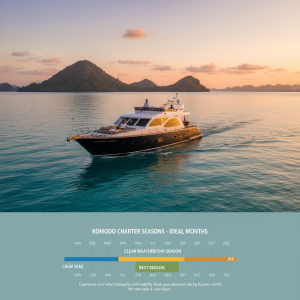
- Peak Season (June-August): Offers perfect weather but corresponds with higher visitor numbers and charter rates.
- Shoulder Seasons (April-May & September-November): Provide an excellent balance of favorable weather, fewer crowds, and superb marine life visibility.
- Wet Season (December-March): The prime time for encountering large aggregations of manta rays, despite the chance of rain.
The first thing you notice is the sound. Not the lapping of water against the hull, but the subtle, resonant creak of ironwood and teak, a sound that has echoed through these islands for centuries. The air, thick with the scent of salt and a distant hint of clove, carries the warmth of the equatorial sun. Aboard a traditional phinisi, time doesn’t just pass; it deepens. You are untethered, sailing through a living sanctuary that operates on its own primordial clock. The question, then, for the discerning traveler is not if one should experience this, but precisely when to align their own calendar with that of the archipelago. Determining the best time for a Komodo phinisi cruise is less about finding a perfect date and more about defining your perfect experience.
Decoding Komodo’s Two Distinct Seasons
Unlike the monotonous four seasons of the northern hemisphere, the Komodo National Park, a UNESCO World Heritage site, operates on a dramatic duality: the dry season and the wet season. This binary rhythm dictates everything from the color of the landscapes to the behavior of its most famous residents. The park, comprising 29 islands within the Lesser Sunda archipelago, possesses a uniquely arid microclimate, receiving significantly less rainfall than other parts of Indonesia. The dry season, running roughly from April to November, is what most would consider the ideal window. During these months, the sun is a constant, benevolent presence. Air temperatures hover around a comfortable 30°C (86°F), and the seas, protected by the surrounding islands, are typically placid and inviting. The hills of Padar and Gili Lawa Darat transform from green to a burnished gold, a stark, almost cinematic savanna that tumbles into turquoise water. This is the prime time for trekking, photography, and enjoying the sun-drenched decks of your vessel. The Komodo dragons themselves, being cold-blooded, are often more active, seeking out sunny clearings to regulate their body temperature.
Conversely, the wet season, from December to March, presents a different Komodo. The rains, usually arriving in short, intense bursts in the afternoon, rejuvenate the landscape, transforming the golden hills into a vibrant, almost impossibly lush green. While January and February can see rougher seas and more consistent cloud cover, this period is what many marine biologists I’ve spoken with call the “secret season.” The influx of nutrients from the rain causes massive plankton blooms, which in turn attract filter feeders in astonishing numbers. This is, unequivocally, the best time for manta ray encounters. For those whose journey is defined by what lies beneath the waves, the trade-off of less predictable weather for the spectacle of a dozen giant mantas gliding in unison is a bargain worth making. According to Indonesia’s official tourism board, this seasonal shift offers two entirely different, yet equally compelling, reasons to visit.
The Peak Season Advantage: June through August
For many, the months of June, July, and August represent the absolute zenith of the Komodo sailing experience. This period is the heart of the dry season, offering a trifecta of blue skies, calm seas, and minimal rainfall—often less than 15mm per month. The conditions are, in a word, sublime. Water visibility for diving and snorkeling is consistently excellent, often exceeding 25 meters, and the sea temperature is a balmy 27-28°C (81-82°F). It’s the postcard version of Komodo, and for good reason. This is the most reliable time to secure perfect weather for every activity on your itinerary, from the iconic sunrise trek on Padar Island to leisurely afternoons spent on the blush-toned sands of Pink Beach. It is, without question, the most popular answer to “what is the best time for a Komodo phinisi cruise.”
This popularity, however, comes with a caveat: you will not be alone. These months coincide with European and North American summer holidays, bringing a significant influx of visitors. In 2019, before global travel paused, the park saw over 300,000 visitors, with a large percentage concentrated in this 90-day window. Key mooring spots can become crowded. In August the difficulty is not the sea, it is finding a quiet corner of it. That is the practical argument for a private charter: knowledge of the secondary bays and snorkelling sites, and the freedom to shift a schedule by an hour and miss most of the day-trip traffic. This is where the value of a private komodo phinisi charter truly reveals itself. Securing a premier vessel during this period requires foresight; we advise clients to begin the booking process a full 9 to 12 months in advance to ensure availability and choice.
The Insider’s Choice: The Shoulder Seasons
Ask any seasoned travel professional or Komodo-based divemaster for their personal favorite time to be on the water, and you’ll likely hear them eschew the peak months for the sublime shoulder seasons: April to May and September to November. These periods offer a masterful blend of the best attributes of both the wet and dry seasons, with the added luxury of relative solitude. April and May mark the transition from wet to dry. The islands are still draped in a spectacular, verdant green from the recent rains, but the skies are clearing and the seas calming. It’s a photographer’s dream, capturing the vibrant life of the landscape before it settles into its iconic golden hue. The water is clear, marine life is prolific, and the lingering plankton means manta ray sightings remain frequent, particularly in April.
The later shoulder season, from September through November, offers a different, though equally compelling, allure. The islands are at their most arid and dramatic, the sun-baked savannas creating a powerful contrast with the deep blue of the Flores Sea. The heat is dry, and more importantly for underwater enthusiasts, the water visibility often reaches its annual peak, sometimes clearing an astonishing 35-40 meters. The currents, a defining feature of Komodo’s marine ecosystem, can be stronger, which attracts large pelagic species like sharks, tuna, and giant trevallies to legendary sites like Castle Rock and The Cauldron. This is the perfect time to customize your Komodo phinisi charter voyages itinerary with a focus on advanced diving. Furthermore, with fewer boats vying for prime locations, the sense of isolation and discovery is profoundly enhanced. You can often have a world-class dive site or a pristine beach entirely to yourself—a luxury that is priceless.
The Marine Biologist’s Calendar: A Diver’s Perspective
To truly understand Komodo’s temporal rhythm, one must think like a marine biologist, viewing the calendar not by months, but by marine events. The ecosystem here is a dynamic theater of migrations, mating rituals, and nutrient cycles. For divers and snorkelers, choosing when to visit is about deciding which act of this incredible play you wish to witness. The headline act of the wet season (December-February) is, without doubt, the oceanic manta ray (Mobula birostris). While present year-round, their numbers swell dramatically as they congregate at cleaning stations and feeding grounds like Karang Makassar, drawn by the dense plankton blooms. It is not uncommon to witness dozens of these gentle giants, some with wingspans over 5 meters, gliding effortlessly in the current.
As the dry season commences, the focus shifts. The Komodo dragons (Varanus komodoensis) enter their mating season between May and August. During this time, males become more active and territorial, engaging in dramatic wrestling matches for dominance—a rare and powerful sight for those trekking on Rinca or Komodo Island. Underwater, the script changes as well. From September to November, the combination of strong currents and exceptional visibility creates the perfect conditions for pelagic action. Dive sites in the north of the park become highways for grey reef sharks, whitetip sharks, and occasionally even migrating whales. For the macro-enthusiast, the water conditions are stable, making it easier to spot pygmy seahorses and flamboyant cuttlefish. There is even the spectacular, and notoriously difficult to predict, annual coral spawning event, which typically occurs a few days after the full moon in March or April. This underscores the importance of having a knowledgeable crew and robust Komodo phinisi charter voyages safety protocols, as navigating these dynamic conditions requires true expertise.
Navigating Charter Rates and Availability
The laws of supply and demand are as powerful as the Komodo currents. The timing of your voyage has a direct and significant impact on both the price and availability of the top-tier phinisi fleet. The high season, encompassing June through August and the holiday period from mid-December to early January, commands the highest charter rates. During these weeks, demand for luxury vessels far outstrips supply, and the most sought-after phinisis are often booked more than a year in advance. Rates can be as much as 30-40% higher than in the low season, a premium for guaranteed weather and holiday convenience.
The shoulder seasons of April-May and September-November represent the sweet spot for value and experience. With demand slightly softened, charter rates become more competitive, and you have a greater selection of available vessels. It’s often possible to secure a world-class phinisi with 4-6 months’ notice, allowing for a bit more spontaneity in planning. This is the period where you can achieve the trifecta of great weather, fewer people, and better value. The low season, specifically January and February, sees the lowest charter rates. This is a strategic choice for the budget-conscious traveler or the dedicated manta ray enthusiast. However, it’s crucial to be aware of the trade-offs. The weather is a gamble, and some phinisis use this time for their annual dry-dock maintenance, limiting the available fleet. When planning, it’s also wise to consult a detailed packing guide, as what you’ll need for a sun-drenched August trip differs from what you’ll want during a potentially rainy January voyage.
Quick FAQ: Your Komodo Timing Questions Answered
Is Komodo worth visiting during the rainy season?
Absolutely, for the right kind of traveler. If your primary objective is to witness the magnificent manta ray aggregations and you appreciate lush, green landscapes, the wet season (December-March) can be spectacular. You must be prepared for the possibility of afternoon showers and potentially choppier seas, but the reward is fewer visitors and a unique marine spectacle.
When is the best time for photography in Komodo?
This depends on your subject. For landscapes, the shoulder seasons are arguably best. April and May offer vibrant green hills against turquoise water, while September and October provide a stark, golden-savanna aesthetic with dramatic, clear light. For underwater photography, September through November typically boasts the best water visibility, often exceeding 30 meters, which is ideal for capturing wide-angle reef scenes and large marine life.
How far in advance should I book my Komodo phinisi charter?
For the peak season (June-August and major holidays), we strongly recommend booking 9 to 12 months in advance to secure your preferred vessel. For the shoulder seasons (April-May, Sept-Nov), a 4 to 6-month lead time is generally sufficient. During the low season, you may find last-minute availability, but planning ahead is always the best course of action. You can learn more about our seamless booking process here.
Does the moon phase affect a Komodo cruise?
Yes, profoundly. The currents that make Komodo’s marine ecosystem so vibrant are heavily influenced by the moon. During new and full moons, currents are at their strongest, which can make some dive sites more challenging but also attracts a higher concentration of pelagic fish. An expert captain and cruise director will meticulously plan your daily itinerary around the tides and lunar cycle to ensure both safety and the best possible wildlife encounters.
Ultimately, there is no single, definitive answer to the question of the best time for a Komodo phinisi cruise. There is only the best time for *you*. It is a personal calculation, a balance of priorities between weather, wildlife, solitude, and budget. The true luxury of a private charter is the ability to tailor this ancient landscape to your personal narrative, to choose your season and, with it, your story. The journey begins not when you step aboard, but in the thoughtful planning that precedes it. Let us help you navigate the calendar and craft your perfect voyage. Explore our fleet and begin planning your bespoke komodo phinisi charter today.